

Last Updated: November 24, 2026
Quick Summary
To protect your hardware wallet with a security bag, seal the device and its backup in a tamper-evident bag, record the bag's serial number, and store it securely. How to protect your hardware wallet with a security bag comes down to buying from an authorized reseller, checking the seal on arrival, re-bagging after setup, and storing the serial number apart.
- Never set up a device that arrives already initialized, since a pre-loaded seed phrase means someone else holds your keys.
- A Faraday bag blocks WiFi, Bluetooth, cell signals, GPS, and RFID using a copper mesh lining.
- Keep the seed phrase backup in a second spot, never the same room as the device.
- Do not label the bag or safe with words like crypto or bitcoin, because conspicuous storage invites theft.
- Every few months, check the bag seal, confirm the serial number matches your record, and make sure the device still powers on.
Table of Contents
- How do you protect a hardware wallet with a security bag?
- Faraday bag for hardware wallet: blocking signals and EMP
- Hardware wallet storage best practices at home
- Frequently Asked Questions
 Trezor Model TView product
How do you protect a hardware wallet with a security bag?
You protect a hardware wallet with a security bag by sealing the device and its backup in a tamper-evident bag, recording the bag's serial number, and storing it securely. This guide walks through how to protect your hardware wallet with a security bag, step by step.
A security bag does one job well: it shows whether someone opened your device before you did.
How to protect your hardware wallet with a security bag comes down to four steps:
- Buy from the manufacturer or an authorized reseller
- Check the seal on arrival
- Re-bag the device and backup after setup
- Record the bag serial number and store it apart
At The Crypto Merchant, we only sell cold wallets we are authorized to sell. Authorized reseller status can usually be verified on the manufacturer's website, and manufacturers generally publish a list of their authorized resellers, so check it before you buy anywhere.
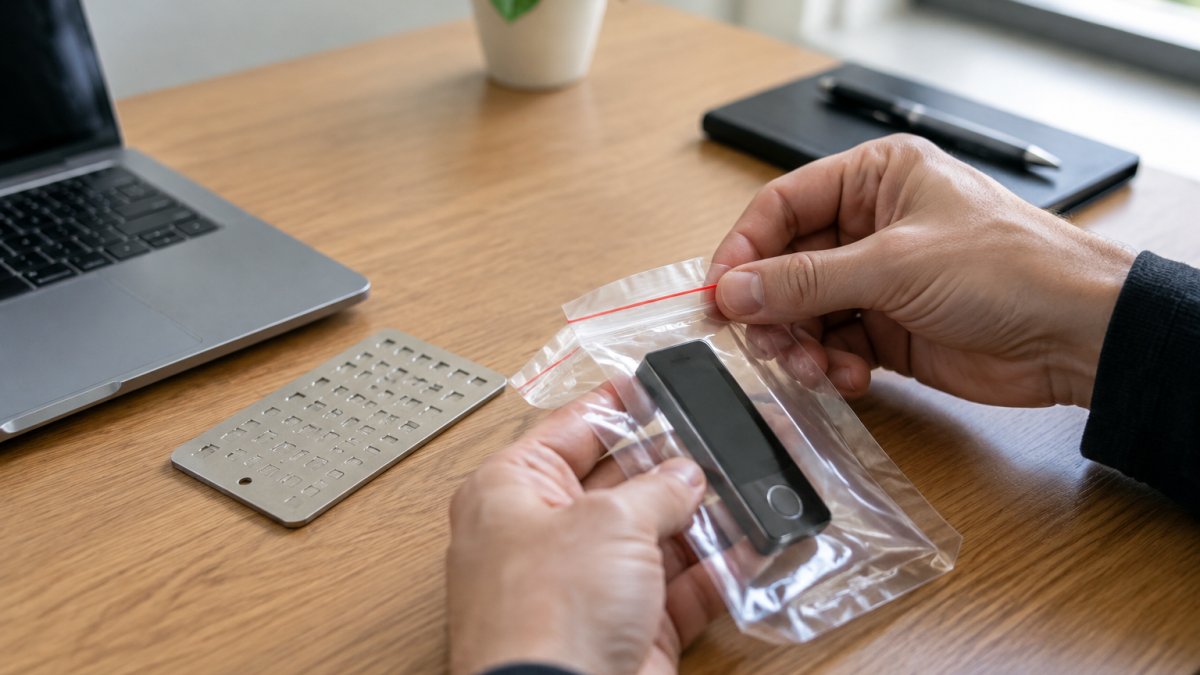
Watch out: never set up a device that arrives already initialized. A pre-loaded seed phrase means someone else holds your keys.
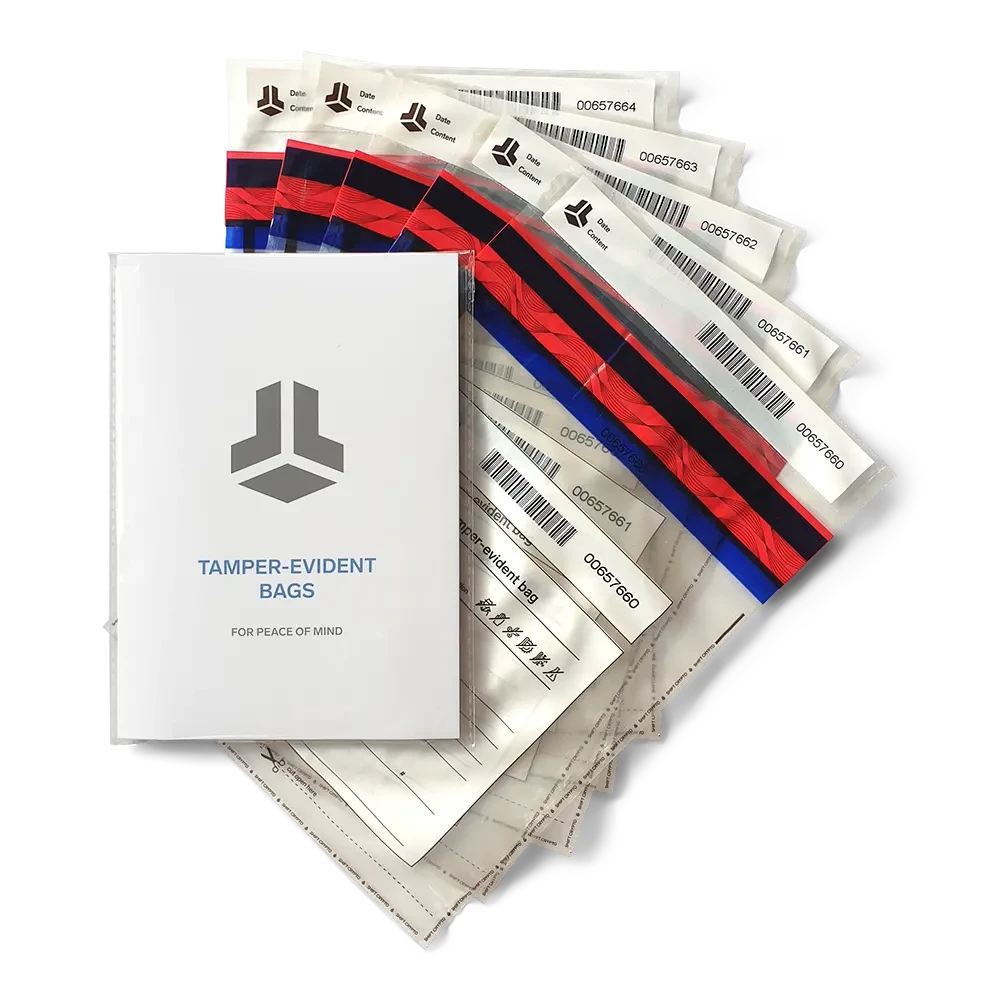
For tamper-evident bags, the Coinkite Security Bag Kit gives you opaque bags, recovery cards, and ESD bags in one pack; the BitBox Tamper-Evident Bags 5 Pack covers spares. To use them correctly, read our guide on how to use tamper-evident bags for crypto security.
Faraday bag for hardware wallet: blocking signals and EMP
A Faraday bag for a hardware wallet blocks radio waves and electromagnetic signals from reaching the device inside, a physical airplane mode for anything you put in it.
Most Faraday bags use a copper mesh lining that stops WiFi, Bluetooth, cell signals, GPS, and RFID. The Signal Killer Faraday Bag blocks these signals and seals with two velcro strips.
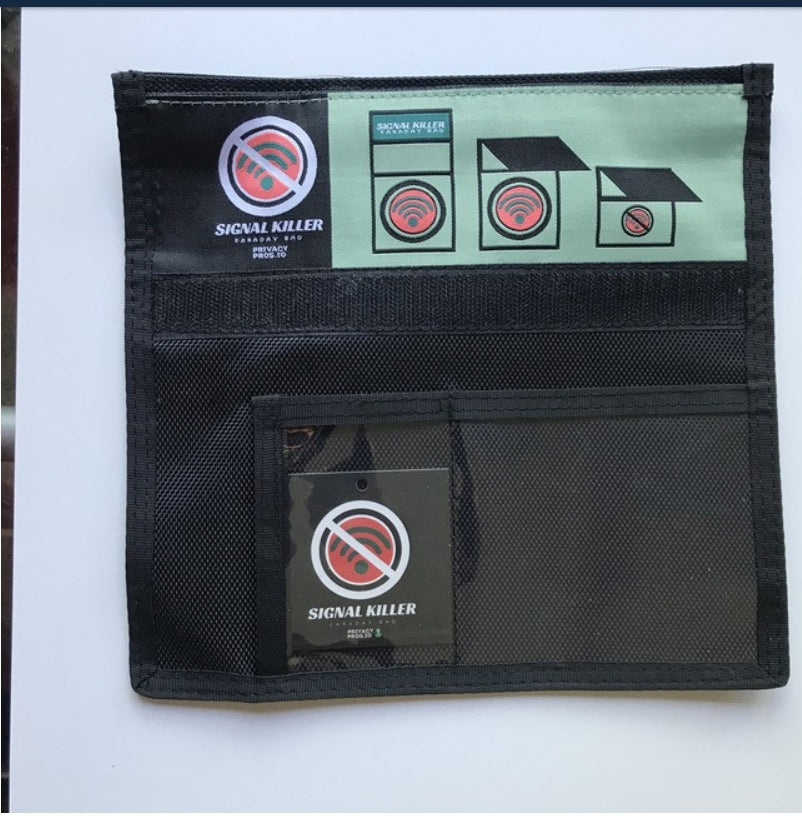
A hardware wallet only signs transactions when you approve them, but a device sitting in a drawer still broadcasts Bluetooth if switched on. Blocking that signal removes one more way in.
Here is the difference most guides skip:
| Bag type | What it blocks | What it shows |
|---|---|---|
| Tamper-evident bag | Nothing | Whether someone opened it |
| Faraday bag | Radio and electromagnetic signals | Nothing |
| Faraday bag with seal | Signals plus access | Both |
Neither bag replaces the other: a tamper-evident bag proves the device was untouched, a Faraday bag keeps signals away. Serious holders use both.
Want the longer version? Our article on why you need a Faraday bag for crypto security covers the full case.
 Trezor Model OneView product
Hardware wallet storage best practices at home
Store your hardware wallet in a cool, dry, locked place, keep the recovery seed in a separate location, and check both on a regular schedule.
A fireproof safe or locked drawer beats a desk. Keep the device away from heat, water, and heavy magnets; if you travel, a crushproof case such as the Casematix hard case keeps it from bouncing around a bag.
Then separate the pieces:
- Device in one secure spot
- Seed phrase backup in a second spot, never the same room
- Bag serial number record in a third place
Storing the seed phrase next to the wallet turns two protections into one, if someone finds both, they have everything.
Do not label the bag or safe with words like "crypto" or "bitcoin." Conspicuous storage invites theft.
Every few months, check the bag seal, confirm the serial number matches your record, and make sure the device still powers on. Five minutes, twice a year, is enough.
Protecting a hardware wallet takes a few small habits, not a big budget, but the hard part is buying from a source you can trust. At The Crypto Merchant, we have sold cold wallets since 2017, we are an authorized distributor of Trezor and SecuX hardware wallets, and every cold wallet we sell comes from a manufacturer that authorizes us to sell it, so you can verify our status before you spend a dollar. Get started with The Crypto Merchant and give your keys the physical protection they deserve.
Frequently Asked Questions
Do hardware wallets need a Faraday bag?
A Faraday bag blocks radio signals, Wi-Fi, Bluetooth, cell, GPS, and RFID, which matters if you want to stop wireless communication to or from a device. Most hardware wallets only connect when you plug them in, so a Faraday bag is optional for daily storage. It becomes useful when you want to prevent any electromagnetic signals from reaching the device, such as during travel or when storing a Bluetooth-enabled wallet.
Can a Faraday bag prevent someone from accessing my crypto?
No. A Faraday bag blocks signals, but it does not stop someone who has your device and your PIN or recovery seed. It also does not protect against physical theft or tampering. Use a Faraday bag as one layer: keep your seed phrase separate, store the device in a safe place, and check tamper-evident seals. The bag adds signal isolation, not access control.
How can I tell whether a Faraday bag is working?
Test it with a phone: place the phone inside the bag, seal it, and call it from another line. If the phone does not ring and shows no signal, the bag is blocking. For a hardware wallet, you can check that Bluetooth pairing fails when the device is sealed inside. The Signal Killer Faraday Bag from The Crypto Merchant blocks Wi-Fi, Bluetooth, cell, GPS, and RFID with 60-80dB attenuation.


