

Table of Contents
- Understanding How to Store Crypto Safely
- Hardware Wallets vs. Software Wallets: What You Need to Know
- Cold Storage vs. Hot Wallet: Choosing Your Storage Strategy
- How to Secure Your Seed Phrase and Private Keys
- How to Avoid Crypto Phishing Scams and Social Engineering
- Implementing Multi-Device Backup and Recovery Strategies
- Security Standards and Certification: What to Look For
- Frequently Asked Questions
Last Updated: September 25, 2026
Understanding How to Store Crypto Safely
The ability to store crypto safely is the foundation of protecting your digital wealth. Unlike traditional bank accounts, cryptocurrency gives you direct control over your assets, but that control comes with responsibility. If someone gains access to your private keys, they own your funds. There's no bank to call, no fraud department to reverse the transaction.
This is where The Crypto Merchant comes in. We've spent years helping investors and traders navigate the complex landscape of crypto security, and the consensus is clear: how you store your assets determines whether they're protected or vulnerable.
The stakes are real. According to the 2026 Crypto Crime Report, illicit cryptocurrency activity continues to evolve, with threat actors targeting poorly secured assets on centralized exchanges. TRM Labs identified specific cryptocurrency exchanges being used for unauthorized activities, highlighting the critical risks of storing your holdings on platforms you don't control.
The good news: storing crypto safely isn't complicated. It requires understanding three core concepts: the difference between hardware and software wallets, the distinction between cold and hot storage, and how to properly manage your seed phrase. Master these, and you've eliminated 95% of the security risks most people face.
Hardware Wallets vs. Software Wallets: What You Need to Know
Hardware wallets and software wallets serve fundamentally different purposes, and choosing between them depends on your use case and risk tolerance.
Hardware wallets are physical devices that store your private keys offline. Think of them as a vault that never connects to the internet. Software wallets are applications on your computer or phone that manage your keys digitally. The security difference is dramatic.
Why Hardware Wallets Offer Superior Protection
Hardware wallets provide the highest level of security for storing crypto safely because your private keys never touch an internet-connected device. When you approve a transaction on a hardware wallet, the device signs it internally and only sends the signed transaction to the network, your keys stay isolated.
This architecture eliminates entire classes of attacks. Malware can't steal your keys. Phishing sites can't trick you into revealing them. Even if your computer is completely compromised, your funds remain secure.
The Ledger Nano X, priced at $99.00, offers Bluetooth connectivity for mobile management while keeping your private keys on a secure element chip. You get on-device confirmation through an OLED display and physical buttons, so you control every transaction without relying on your computer.
 Ledger Nano XView product

For users prioritizing maximum security with minimal complexity, the Trezor Model One at $29.00 delivers open-source firmware and a straightforward interface. Its compact design and two-button confirmation process make it ideal for long-term cold storage.
When Software Wallets Make Sense
Software wallets are appropriate for smaller amounts you actively trade or use for payments. They offer speed and convenience that hardware wallets can't match. You can approve transactions instantly without reaching for a physical device.
The tradeoff is security. Your private keys live on an internet-connected device. This exposure creates risk, not certainty of loss, but a genuine vulnerability. Software wallets make sense for amounts you could afford to lose, or for temporary holdings before moving funds to cold storage.
Industry guidance emphasizes a layered approach: keep 90% of your holdings in cold storage and maintain smaller amounts in hot wallets for active trading.
Cold Storage vs. Hot Wallet: Choosing Your Storage Strategy
Cold storage and hot wallet storage represent opposite points on the security-accessibility spectrum. Understanding when to use each is essential to protecting your portfolio.
Cold Storage for Long-Term Holdings
Cold storage means keeping your private keys completely offline and isolated from internet connectivity. This eliminates the primary attack vector: network-based threats. Your keys literally cannot be remotely accessed because they're not connected to anything that is.
For long-term holdings, users prioritize hardware wallets with secure element chips. This indicates the device has passed rigorous physical security testing, it's resistant to tampering, side-channel attacks, and component extraction.
Cold storage works best for assets you plan to hold for months or years. The inconvenience of retrieving your hardware wallet and confirming transactions becomes irrelevant when you're not moving funds frequently. What matters is that your wealth is protected.
For maximum security, purchase hardware wallets from authorized distributors. Supply chain attacks, where devices are compromised before reaching you, represent a real threat.
Hot Wallets for Active Trading
Hot wallets are internet-connected and designed for frequent transactions. They're essential if you trade regularly, accept payments, or move funds between platforms.
 Trezor Model OneView product
The 2026 State of Crypto Holders Report found that 41% of holders send assets to friends and family and 40% use crypto for shopping and payments. This activity requires accessible storage. Hot wallets provide that accessibility.
The strategy is straightforward: use hot wallets for the amount you need to transact within the next 30 days. Everything else goes to cold storage. This approach gives you liquidity where you need it while protecting the majority of your wealth.
| Storage Type | Best For | Security Level | Access Speed |
|---|---|---|---|
| Cold Storage (Hardware Wallet) | Long-term holdings, large portfolios | Maximum | Slow (requires device) |
| Hot Wallet (Exchange/Software) | Active trading, payments | Moderate | Instant |
| Layered Approach | Mixed portfolio | High | Balanced |
How to Secure Your Seed Phrase and Private Keys
Your seed phrase is the master key to your entire wallet. If someone obtains it, they can restore your wallet on any device and steal all your funds. Protecting it is non-negotiable.
Creating and Backing Up Your Seed Phrase
When you create a hardware wallet, the device generates a seed phrase, typically 12 or 24 words in a specific order. This phrase can recreate your entire wallet and all its private keys. Write it down immediately.
Never store your seed phrase digitally. Not in a note app, not in a password manager, not in an email draft. Digital storage creates a copy that exists on servers, backups, and cloud services you don't control. A single breach exposes your entire portfolio.
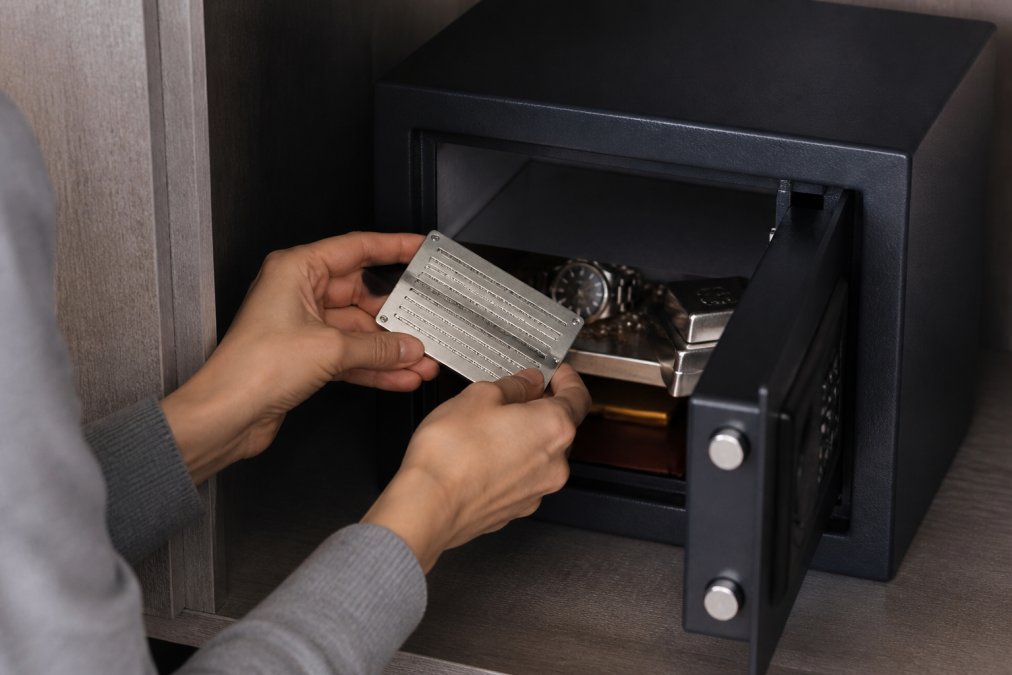
Write your seed phrase on paper using a pen. Make multiple copies. Store each copy in a separate secure location, your home safe, a safe deposit box, a trusted family member's secure location. Geographic diversification means a single disaster (fire, flood, theft) won't destroy all your backups.
Physical Storage Methods for Maximum Protection
Paper is vulnerable. Water, fire, and age degrade ink and paper fibers. For long-term security, the Ledger Billfodl Stainless Steel Recovery Seed Backup Tool ($99.99) provides a better solution.
 Ledger BillfodlView product

How to Avoid Crypto Phishing Scams and Social Engineering
Phishing and social engineering are how attackers steal cryptocurrency without ever touching your hardware wallet. They manipulate you into revealing your seed phrase or approving malicious transactions.
Recognizing Common Phishing Tactics
Phishing emails and websites impersonate legitimate crypto platforms. They claim there's a security issue, ask you to "verify" your account, or offer a special promotion that requires logging in. The goal is always the same: get you to enter your credentials or seed phrase on a fake site they control.
Protecting Against Social Engineering Attacks
Social engineering is more sophisticated. An attacker might call you claiming to be from customer support, build rapport, and gradually ask questions designed to extract information about your security setup.
Implementing Multi-Device Backup and Recovery Strategies
A single backup point creates a single point of failure. Multi-device backup strategies ensure you can recover your wallet even if one backup is lost, stolen, or destroyed.
Geographic Diversification of Backups
Store your backups in physically separate locations. Home safe. Safe deposit box. Trusted family member's home. This geographic separation protects against localized disasters, fires, floods, theft, or break-ins that could destroy all your backups if they're stored together.
Testing Your Recovery Process
Never assume your backup will work when you need it. Test your recovery process at least once per year. This isn't paranoia, it's the difference between a backup that works and a backup that fails when you desperately need it.
Security Standards and Certification: What to Look For
Not all hardware wallets meet the same security standards. Understanding certifications helps you identify genuinely secure devices versus marketing claims.
Frequently Asked Questions
What is the difference between hot and cold storage for crypto?
Cold storage keeps your private keys completely offline and disconnected from the internet, making it impossible for hackers to access your assets remotely. Hot wallets are connected to the internet for active trading and everyday transactions. Cold storage is safer for long-term holdings, while hot wallets offer liquidity for frequent trading. The 2026 Cryptocurrency Adoption and Sentiment Report recommends using cold storage for the majority of your holdings and keeping only smaller amounts in hot wallets for active trading.
How do I protect my seed phrase from physical theft?
Store your seed phrase on physically durable materials like stainless steel rather than paper, which is vulnerable to water, fire, and deterioration. The Ledger Billfodl is a marine-grade stainless steel backup tool that is scientifically tested and certified as fire, water, and shock proof. Keep multiple copies in separate secure locations, such as a home safe and a safe deposit box, to ensure recovery even if one location is compromised. Never store your seed phrase digitally or photograph it with a connected device.
What makes a hardware wallet like Trezor or Ledger safer than keeping crypto on an exchange?
Hardware wallets store your private keys completely offline on a secure element chip, giving you full control over your assets through self-custody. Exchanges are centralized platforms vulnerable to hacking, insider theft, and regulatory issues. The 2026 Crypto Crime Report from Chainalysis documented illicit cryptocurrency networks using centralized exchanges, highlighting the risks of exchange-based storage. When you own a hardware wallet, only you can authorize transactions, no third party can freeze or steal your funds.
How do I know if a hardware wallet is authentic and hasn't been tampered with?
Purchase hardware wallets from authorized distributors like The Crypto Merchant, which is an authorized distributor of Trezor and SecuX wallets. Avoid third-party resellers on general marketplaces, as they carry a higher risk of supply chain compromise. Verify the device's firmware upon setup, check the packaging for tamper-evident seals, and confirm the product's serial number with the manufacturer if needed.


