

Last Updated: November 7, 2026
Quick Summary
Tamper-evident bags are worth it for many hardware wallet owners as one layer of a wider storage routine. They do not stop a determined thief, but they reveal when someone has opened the package, which is what makes them useful for wallets and their backups.
- The BitBox Tamper-Evident Bags 5 Pack is listed at $14.99.
- A tamper-evident bag is a detection tool, not a lock.
- Record the bag's seal condition and serial number, and store that record separately from the bag.
- Measure the device, recovery material and accessories, and add clearance before sealing.
- Bags do not protect a recovery phrase, so anyone who obtains it can restore the wallet elsewhere.
Table of Contents
- What Is a Tamper-Evident Bag and What Does It Protect?
- How Tamper-Evident Bags Show Someone Has Opened Them
- Tamper-Evident Bag Seal Types and How Reliable Each Is
- How to Verify a Bag's Tamper Evidence Before You Rely on It
- Choosing the Right Size for Your Hardware Wallet and Accessories
- Hardware Wallet Travel Security: Carrying Your Wallet Safely
- Limits of Tamper-Evident Bags and Your Next Step With BitBox Bags
- Frequently Asked Questions
Tamper-evident bags are worth it for many hardware wallet owners, but only as one layer of a wider storage routine. The BitBox Tamper-Evident Bags 5 Pack is available for $14.99, and this guide explains what these bags do, what they cannot do, and how to use them with realistic expectations. The key point is simple: a tamper-evident bag does not stop a determined thief, but it can reveal that someone has opened the package. That visible evidence is what makes these bags useful for hardware wallets and their paper or steel backups.
 Ledger Nano X PurpleView product
What Is a Tamper-Evident Bag and What Does It Protect?
A tamper-evident bag is a sealed pouch with a security seal that shows visible damage if someone tries to open it without breaking the seal. It is a detection tool, not a lock. For hardware wallet owners, the bag protects the device and its recovery material from undetected access while it sits in a drawer, safe or storage location.
The main purpose is to answer one question: has this package been opened since I last checked it? Tamper-evident bags do not make a wallet unhackable. The recovery phrase still needs protection, because anyone who obtains it can restore the wallet elsewhere. The bag adds a detection layer on top of your existing practices.
How Tamper-Evident Bags Show Someone Has Opened Them
Most tamper-evident bags use a seal that leaves a visible mark when disturbed. Common signs include torn or broken adhesive, a void message that appears once the seal is pulled apart, or a sealing strip that shows residue or distortion. Good bags make these signs easy to spot without special tools.
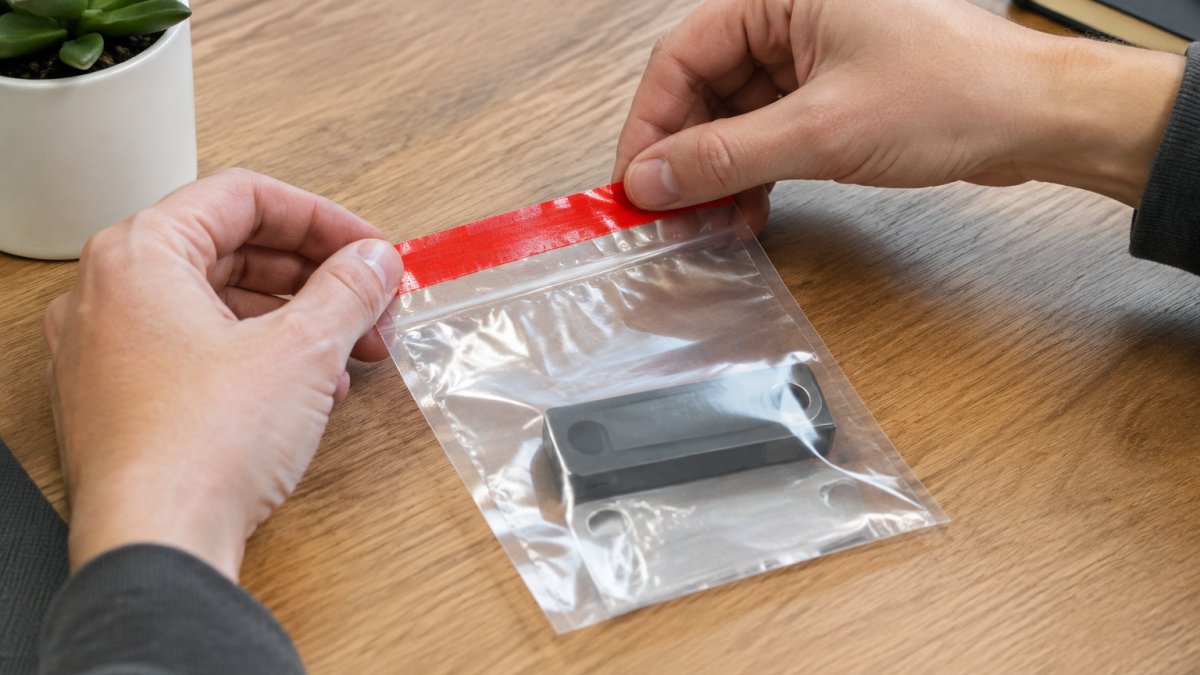
Clear material also helps. If the contents are visible through the bag, you can check at a glance whether the device and backup are still in place. The bags are made of transparent material, which makes visual checks easier. Still, visibility only helps if you actually look, so build a quick check into your storage routine.
 Ledger Nano S PlusView product
Tamper-Evident Bag Seal Types and How Reliable Each Is
Seal design matters more than the bag material.
No seal type is foolproof. Adhesive seals can sometimes be lifted and resealed by a skilled person, and any seal weakens with heat, cold or repeated handling. A practical approach is to choose a seal type you can inspect easily, record your bag's condition at sealing, and replace bags that show wear. Watch out: a seal you never check gives you no protection at all.
How to Verify a Bag's Tamper Evidence Before You Rely on It
Before trusting a bag, inspect it. Check that the seal is intact, the adhesive lies flat and the bag shows no early signs of damage. Test the closure on an empty bag first if you can, so you understand how the seal looks when opened and how it looks when properly closed.
Record what you did. Note the date, the bag's seal condition and any serial number. Keep this record somewhere separate from the bag itself. If you later find a broken seal, your notes let you compare the current state with what you originally sealed. Many people skip this step, and it is the step that makes detection useful.
Choosing the Right Size for Your Hardware Wallet and Accessories
Most tamper-evident bags are sold by exterior dimensions, and that number is misleading for hardware wallet storage because the usable interior is smaller once the seal flap folds over. The practical approach is to measure the three things you actually plan to seal, then add clearance for the closure.
Start with the device itself. Measure its length, width and thickness at the thickest point, including any button or screen protrusion. You can also shop fitted cases and accessories sized for Trezor, Ledger, SafePal, Ellipal, imKey and KeepKey wallets. Shapes vary widely, so use your own calipers or a ruler rather than a spec sheet. Next, measure the recovery material you store with it: a steel backup plate, a punched metal card, or a folded paper card each adds its own footprint. Finally, add any cable, adapter, or fitted case you intend to keep in the same bag.
Add clearance on every side. A bag that is too tight forces you to crease the seal, and a creased seal is harder to inspect later. A bag that is far too large lets contents slide, which can abrade the seal from the inside.
Use a simple fit test before sealing anything valuable. Place the empty bag on a flat surface, insert the device and accessories, and press the seal closed with the bag lying flat. If the material bunches at the closure or the seal line curves, size up. If the contents rattle when you tilt the bag, size down or add a thin foam or cardboard insert to take up slack.
Compatibility goes beyond dimensions. Devices with rounded corners, lanyard loops, or attached keyrings can catch on the bag edge, so check that the opening clears those features. If you store a steel backup with sharp stamped edges, a slightly thicker bag material reduces the chance of a puncture that could be mistaken for tampering.
Watch out: a bag that fits the device but not the recovery card forces you to choose between protecting one or the other, and splitting them across two bags doubles the number of seals you must inspect.
Hardware Wallet Travel Security: Carrying Your Wallet Safely
Travel adds risk because bags get handled, dropped and opened in unfamiliar places. Keep your wallet sealed in its bag during transit, and store the bag in a personal item you control rather than checked luggage. Avoid leaving the package in a car or hotel room where others could easily access it.
Check the seal on arrival and again before you leave. If anything looks disturbed, do not assume the contents are safe. Use a separate, verified device for any new setup rather than relying on a suspicious wallet. Good travel habits matter as much as the bag itself.
Limits of Tamper-Evident Bags and Your Next Step With BitBox Bags
A tamper-evident bag answers one narrow question: has this package been opened since I sealed it? Everything else is outside its scope, and being clear about that is what makes the bag useful rather than falsely reassuring.
Think in terms of a threat model. The bag addresses undetected access by someone who opens the package and reseals it, such as a housemate, a hotel cleaner, or a person who briefly handles your storage. It does not prevent access. A determined thief can cut the bag, take the contents, and leave the damaged bag behind; you will see the damage, but the loss has already happened. It does not encrypt the recovery phrase. Anyone who obtains the phrase can restore the wallet on another device regardless of the bag. It does not protect against fire, water, or physical destruction, and it does not defend against coercion, where someone forces you to open the bag yourself.
The bag also cannot detect every form of interference. A skilled person may be able to lift and reseal some adhesive closures, and a copied backup leaves no trace if the original is returned. Serialized seals raise the bar because you can log the number and compare it later, but serial numbers can be photographed and reproduced on a replacement bag. Treat the seal as evidence, not proof.
Environmental limits matter for long-term storage. Adhesive ages, and heat, humidity, and repeated handling all weaken the bond. A bag stored in a hot garage or a damp basement may show seal degradation that looks like tampering, which creates false alarms. Store sealed bags in a stable, dry location and inspect them on a schedule rather than only when something seems wrong.
A practical workflow closes most of these gaps. Label each bag with contents and date, photograph the sealed bag including any serial number, and log the photo somewhere separate from the bag. Check the seal at every scheduled review and compare the current state to your photo. If a seal looks disturbed, treat the contents as compromised and move the wallet to a new device rather than assuming the best.
If you want that detection layer, the BitBox Tamper-Evident Bags 5 Pack is available for $14.99 and works with a range of hardware wallets. Pair it with strong passphrases, a secure backup location, and the verification steps above, and use the bag as one layer of a routine rather than a substitute for one.
The table below summarises the limits of tamper-evident bags, so you can see at a glance what they do and do not protect against. To compare other physical security options alongside these bags, you can browse Security & Physical Protection.
| Threat or limit | What the bag does | Practical note |
|---|---|---|
| Undetected opening | Shows visible damage if opened | Detection only, not prevention |
| Thief cuts the bag | Damage is visible, loss already happened | Bag does not stop theft |
| Recovery phrase obtained | No protection | Anyone with the phrase can restore the wallet |
| Adhesive resealed by skilled person | May be hard to spot | Seal is evidence, not proof |
| Heat, humidity, handling | Seal can weaken over time | Can cause false tamper alarms |
| Coercion | No protection | Bag cannot stop forced opening |
| BitBox Tamper-Evident Bags 5 Pack | Price listed as $14.99 | Use as one layer of a routine |
Frequently Asked Questions
What is the best tamper-evident bag for a hardware wallet?
The right choice depends on the size of your device and backup materials and the level of protection you want. The BitBox Tamper-Evident Bags 5 Pack, priced at $14.99, is designed for hardware wallets and steel recovery sheets, with a strong seal, security seams and a transparent material that makes visual checks easier. Measure your wallet and accessories first, then confirm the bag has enough room so the seal is not stretched or forced closed.
Do tamper-evident bags protect a hardware wallet from theft?
A tamper-evident bag does not stop theft by itself. It is designed to reveal whether someone attempted to access your hardware wallet or backup, which gives you a chance to act before relying on that storage. If the seal shows signs of opening, check your accounts for breaches and do not assume the contents are safe. Pair the bag with secure physical storage and a backup plan for your recovery phrase.
Can you reuse a tamper-evident bag?
Once the closure is sealed, opening the bag should leave visible evidence, which is the purpose of the design. Keep a record of each bag, such as the receipt or a logged serial number, in a separate safe place.
What should you store with a hardware wallet in a tamper-evident bag?
Many people store the hardware wallet with its recovery phrase backup, such as a steel sheet, so both items can be checked together. The BitBox bag provides enough room for steel sheets and the wallet itself. Avoid placing passwords or the full recovery phrase in plain text anywhere that is easy to access. Store the sealed bag in a secure location, and check it regularly for signs of opening or damage.


